Name
An eccentric scientist discovers a way to contact extraterrestrial life, and slowly falls in love with his liaison.
Writing the Script (writ. 2025)
An experimental script built as a conversation between a human and an alien, the challenges in writing Name (2026) were innumerable. How do you properly write the first communication with an unknown entity? How do you properly write a film almost entirely built off of text conversations? How do you keep it interesting, engaging, riveting, etc., etc.
Those challenges are exactly what make this script so interesting, engaging, riveting, etc., etc. Inspired by films like Arrival (2016), Her (2013), and 2001: A Space Odyssey (1968), the goal was never to pitch the idea of interplanetary travel, but to question the motives behind it. Why are we so eager to leave, to find something new, when our planet is actively crumbling because of us.
Additionally, Name also speaks on more contemporary issues, such as online dating, incel culture, and the growing troubles of the internet.
Clearly, this script has a lot of layers, and it successfully tackles all of them in just 10 pages.
If interested in reading, contact for more information.
Directing the Film (dir. 2025)
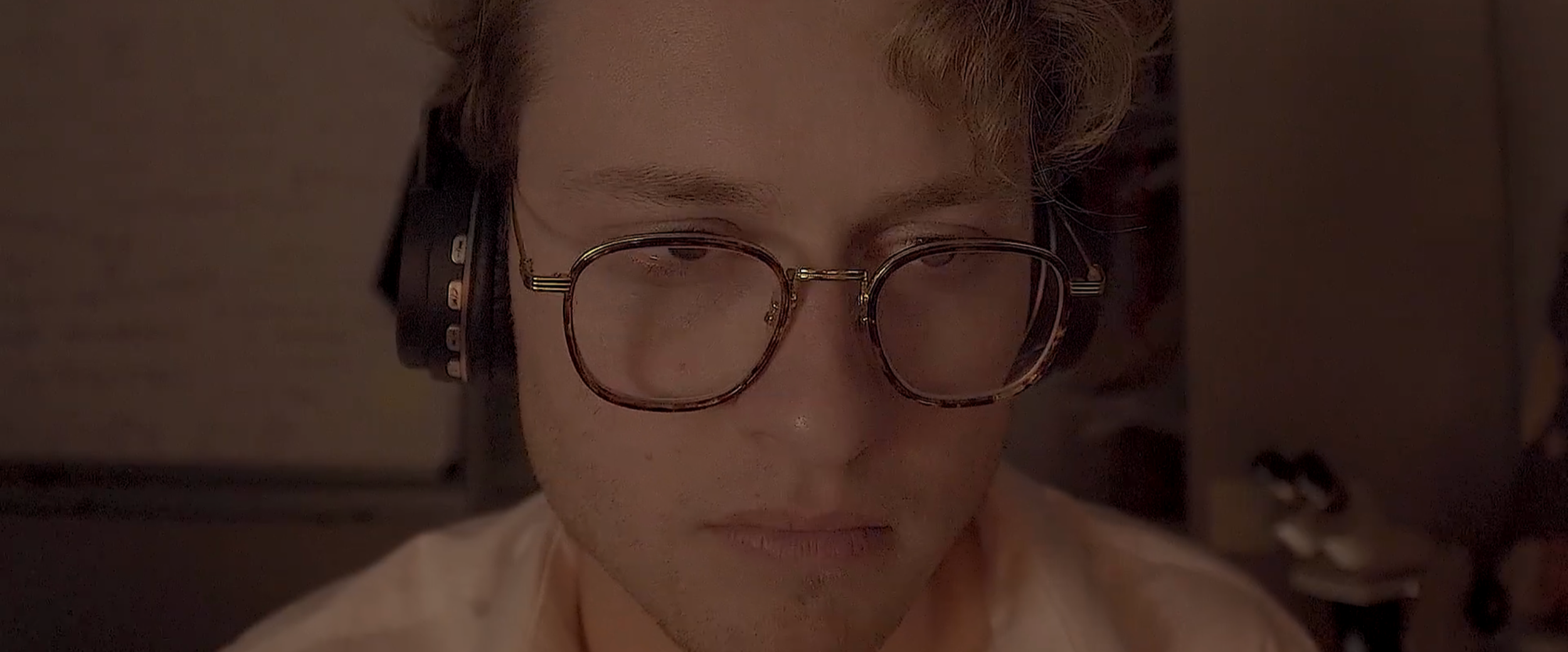
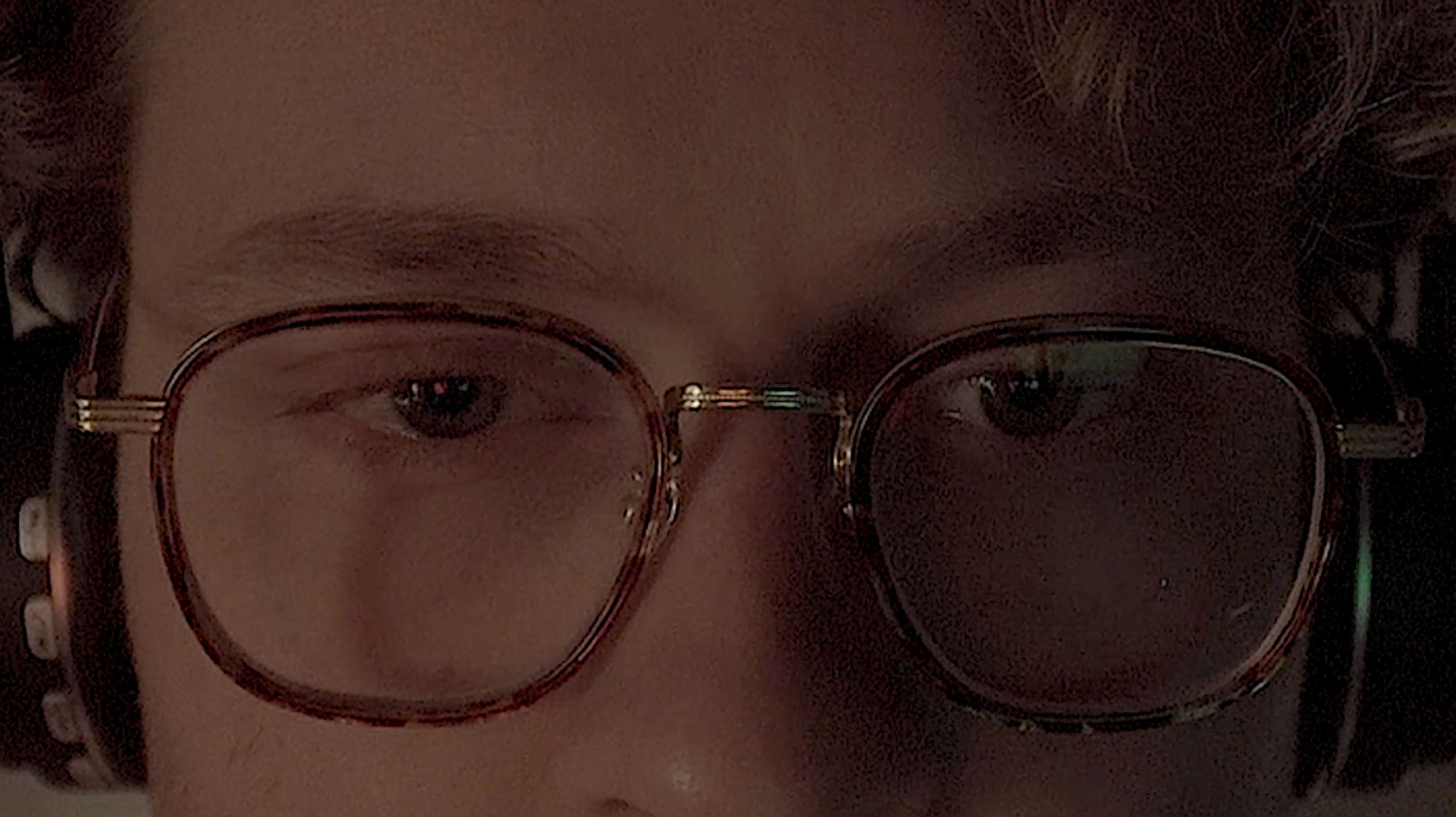
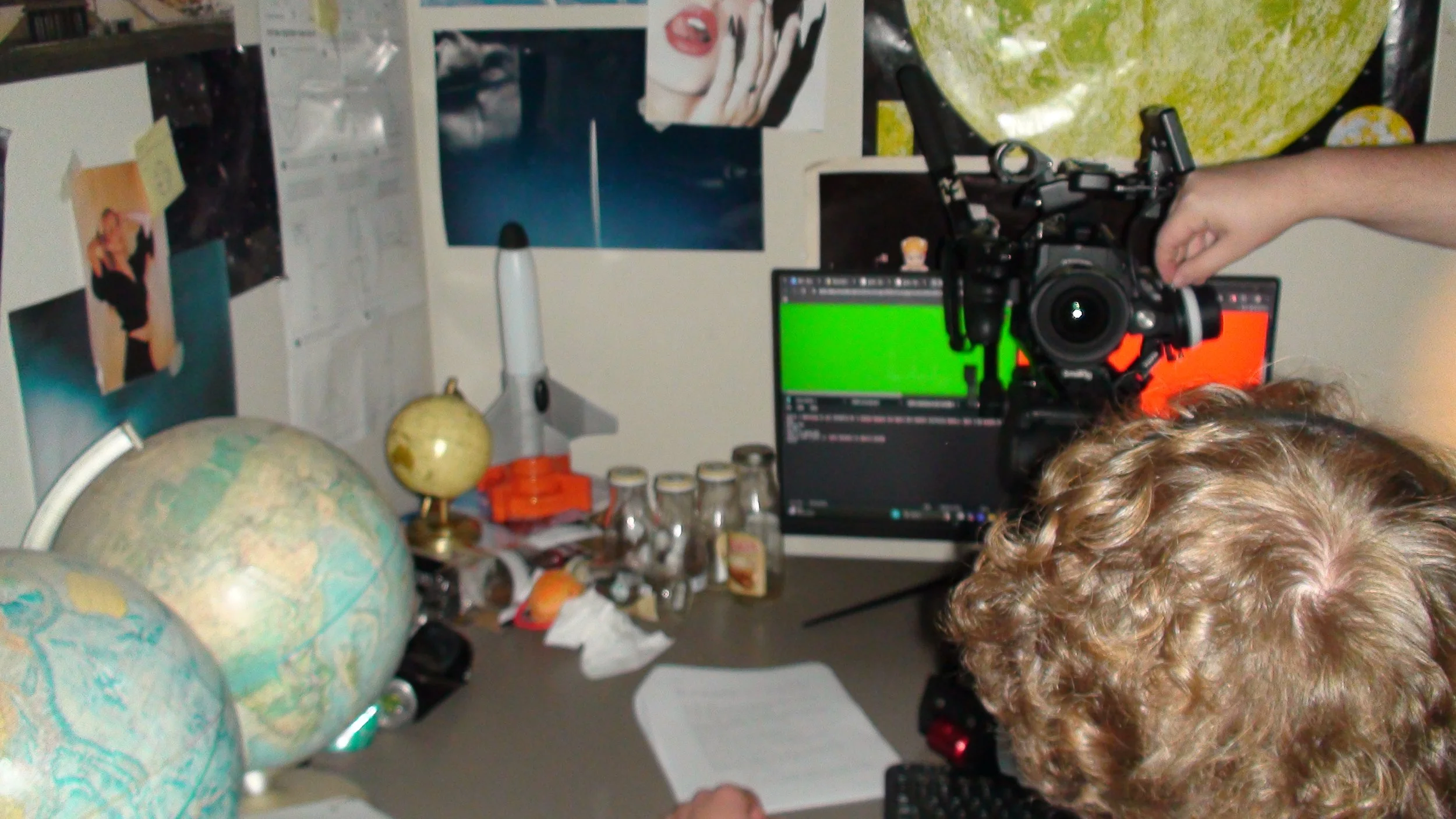
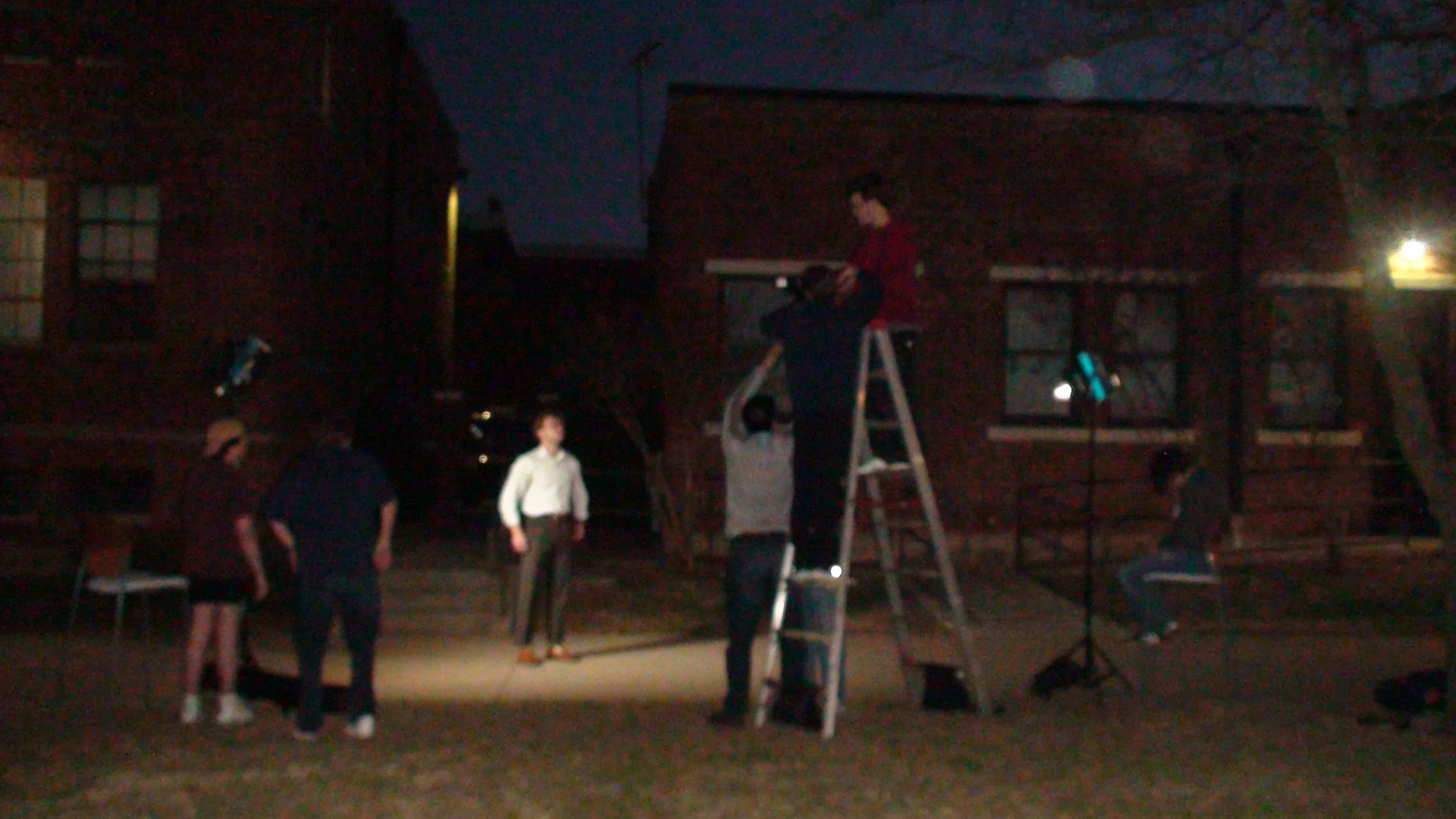
The process of directing Name (2026) was intense. There was a severe time crunch in terms of the location, as well as the cast and crew, meaning we had to make every single second worth it, and yet, you’d never know. Despite the tribulations, Name was fantastic experience.
It’s difficult to direct a single actor when his scene partner is essentially text on a screen. The inherent connection between actors is something incredible to witness, but nearly impossible to replicate when the other actor isn’t even a real entity, but rather, coded text built entirely to respond to dialogue. Therein lies the greatness of this film, bringing about tension, anxiety, and personal emotion within a single actor, and equally so, making the text on screen feel as if its another actor, building both “performances” off of each other.
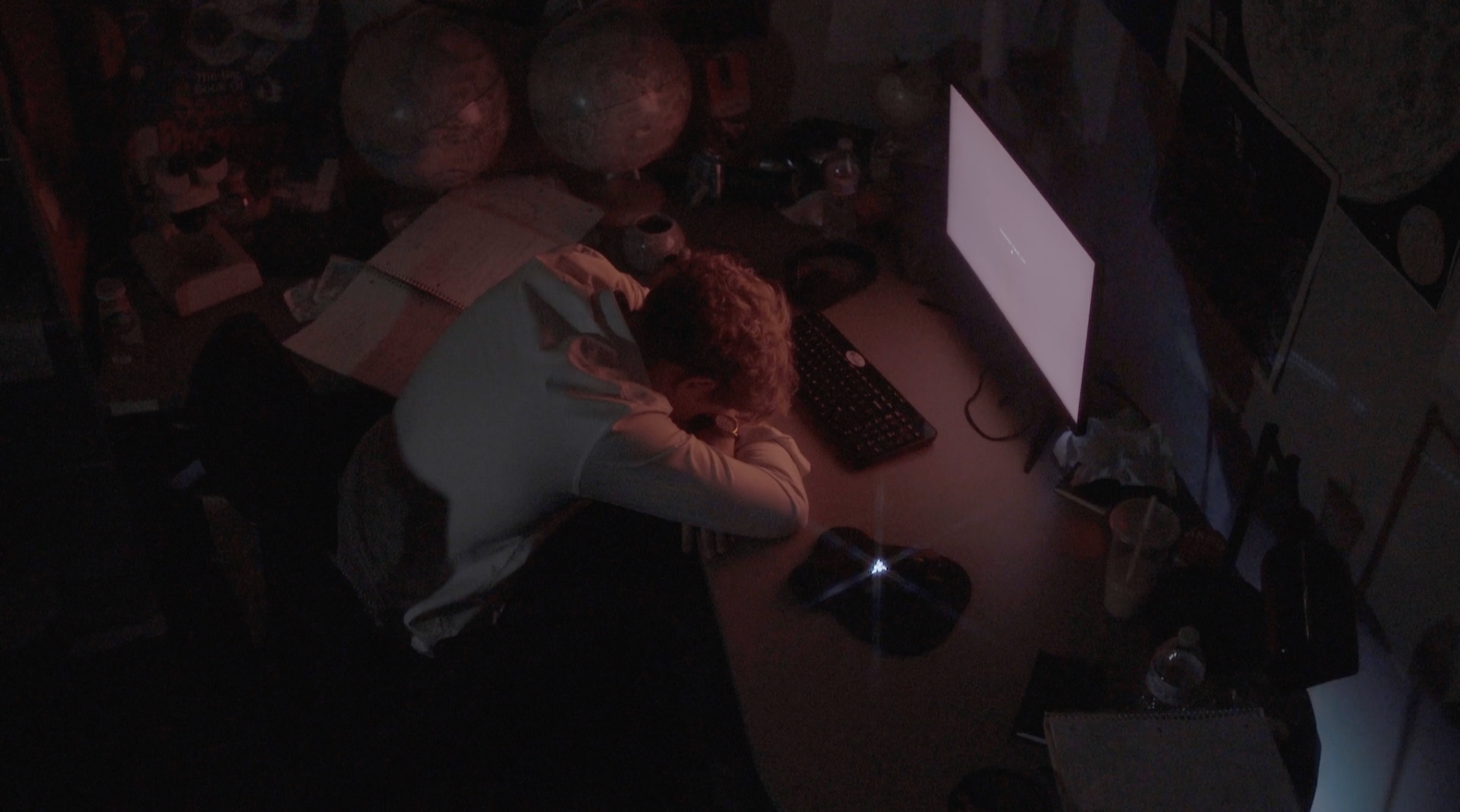
An additional step involved in the process of making Name was the elusive ending, which was properly planned months ahead of time, but in the moment, needed to be reorganized. Directing this films ending was a great achievement, not only because of its elaborate setup, but because the crew was able to overcome uncertainty, unwilling to waiver in the face of it. This is exactly what makes the final shot of Name so incredibly important.
Designing the Poster (desig. 2026)
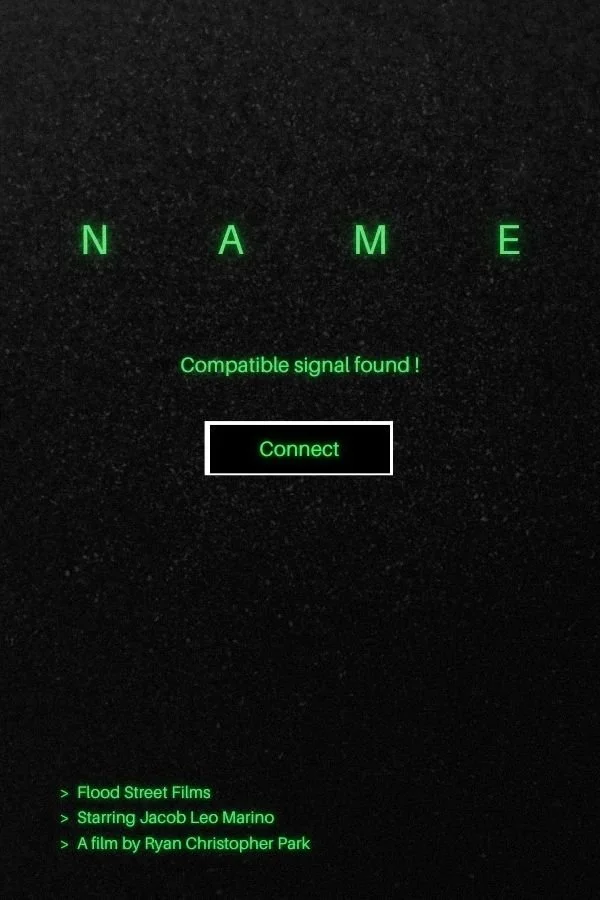
For Name (2026), the plan was simple; less is more, especially when it comes to a science fiction thriller, as is evident by the infamous Alien (1979) poster.
The actual film features a wonderfully crafted python code, designed by Nathan Stephani, which was the basis for this poster design. The striking green typography with the solid black background provided a simple stylistic identity that matched extremely well with the original film, ultimately giving potential audience members an idea of what the film is about, which is really the main goal.
Additionally, the intense film grain overlay thrown over the top of the poster, with some key elements brought to the front of the grain in order to create a dimensional effect, was designed specifically to evoke a few different emotions and ideas.
First, there needed to be some sort of texture in the graphic, otherwise the poster would simply be too boring and flat. Second, the intensity of the grain, the blurriness of it, sparks a sense of tension between the viewer and the background, causing the viewer to question what really is out there behind the grain. Third, with the film being about alien life, It wound up being interesting to add an increase of light on top of the page, fading to black towards the bottom, almost mimicking that of a UFO light coming from the sky, hence why the grain is intense, large, and noticeably gray-scaled rather than a simple texture.